
A Middle-Grade Prankster Helps Readers Explore Their Hearts with Bonnie Swinehart

Updated: Mar 14
Bonnie Swinehart shares the antics and joy in her 3-book Middle Grade Benjy Series with BookWorthy.

Join in the madness and help choose the #1 Middle Grade Book
The Middle Grade Madness contest and giveaway have begun. You can help choose the champion and enter to win 30 middle-grade books.
Discover more and join in the fun over on YouTube
It is a whole lot of book fun!
This full transcript has been lightly edited for clarity but reflects the full conversation from the BookWorthy Podcast. Grab a cup of coffee, listen, and read along. This post does contain affiliate links. Thanks for your support.
Valerie - Welcome to BookWorthy, where we talk about the heart behind the books your kids are reading. Today, we're talking with children's author Bonnie Swinehart about her three-book middle-grade Benjy series. Benjy is a lovable 11-year-old in the 1930s, and he can't seem to help himself from pulling pranks and letting people down. His target most often is Miss Nettie, the school Marm of one of the one-room schoolhouses where he gets into more trouble than she's willing to tolerate. Welcome to Bookworthy, Bonnie.
Bonnie - Thank you. I'm happy to be here.
Valerie, it's good to have you here. We'll start our time with our random question of the week, and this one's a doozy. If you could instantly become an expert in something, what would it be?

Bonnie - Well, that is really a loaded question. I think maybe just an expert in how to help people when they're going through some kind of trauma. That would be my expertise, I would like.
Valerie - That would definitely be helpful because it's hard to know how to respond, how much to respond, how little to respond, because everybody takes both trauma, grief, and struggles differently. So it says a lot about your heart and your love for people, too. So that's exciting. I think I would choose cooking because that's not a place where I excel, and my kids are very picky eaters. So just to be able to whip something up easily that nobody's going to complain about would be a great skill.
Bonnie - Yeah, I love cooking, but I love baking even more. Yeah.
Valerie - Yes, yes, the sweet things are always the best. Too fun. Well, Bonnie, why don't you tell us a little bit about your books, the Benjy series?
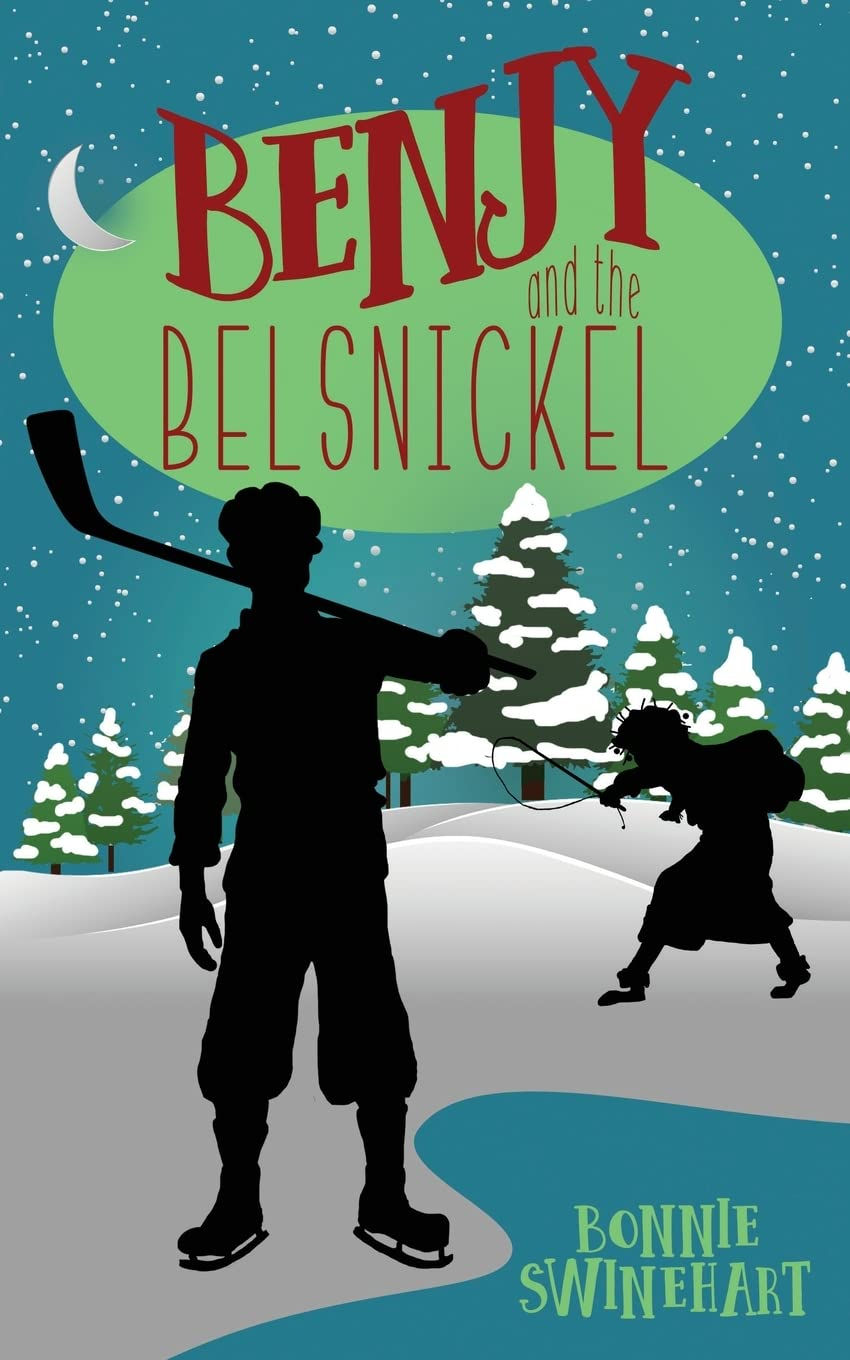
Bonnie - Okay, well, I'm just going to give a little background on how the books came about. I was working as a full-time reporter for three newspapers when I was in a car crash where somebody just didn't, I guess they just didn't see me, and bang. And after that, I was not able to work. And so, sitting at home, not knowing what I'm going to do with the rest of my life.
I just got the idea one day to go dig out every piece of writing that I have. And in that piece of all the writings, I found something that I had started about Benjy and the bell snickle. So I had done a couple of stories on the bell snickle that I had gone to see and witnessed how the children reacted. And so that became the premise, and my Parents both went to one-room schoolhouses in the 1930s, so the setting just seemed to be perfect.
Valerie - Okay, help me a little bit. What is a BelSnickel?
Bonnie - Okay. Well, the Belsnickel actually came about in the southern part of Germany and came over with the Pennsylvania Dutch people because most of us have German descent, and I do, of course, but the Belsnickel is basically the opposite of Santa Claus, but not the extreme nastiness of, like, yeah. So he just tries to help children make better decisions so that they're not in trouble all the time. And he usually visits, of course, during Christmas time.
Valerie - Of course, and so Benjy is a prime suspect.

Bonnie - Yes, he is. I'll see you soon and find out.
Valerie - Very neat. Well, what kind of trouble does Benjy get into in your second book?
Bonnie - Well, the second book actually, it kind of twists a little bit, where in the first book Benjy's the prankster, and in the county fair book, which is Benjy and the county fair, was the second book. His dad surprises him on the last day of school with three very, very naughty goats and says, Benjy, it's your job. You've got to take care of them. My gosh. Benjy's like, my God, I don't know anything about goats, but he knows when his dad tells him that he needs to do it, and he needs to learn that goats are the pranksters in that book. Those goats, you think Benjy has an imagination. Well, those goats think of things that just have Benjy going in circles all the time, trying to keep these goats in check. But actually, he gets the idea that maybe he wants a brand new bicycle. That's his whole goal for the summer. And he gets the idea that maybe he can turn one of the goats into a show goat. And so the book begins.

Valerie - Very fun. We have some friends with goats, and it is very unique. All the trouble they can get into. Like, how did you do that? They're worse than toddlers. And well, in your third book, things get a little mysterious. What happens in that one?
Bonnie - Well, when it came to the third book, I just wanted to... The first book, The Bellsnickel, is a bit of a mystery as well, but I wanted to challenge myself to do something really different. And I know mysteries are very... They draw that age group in. So I decided that I was going to try a mystery. I only had a vague idea of what this book was going to be about. And that book, when I was reading it, which I don't know if you've ever heard, there are two kinds of writers, plotters and panzers. I'm a panzer. I get the story as I'm writing it in my head, which is a little dangerous sometimes, I think. But anyway, that book went places I never knew it was going to go. There are so many twists and turns. And the people who have read it have said to me, I never saw it coming, meaning the ending. So, I guess I did a pretty good job.
Valerie - Too fun. That's how you know you did a good job: when nobody can figure it out. Cause what is it? I've heard it said that most people who read mysteries are the people who want to know it all or think they know it all. So it's fun to be challenged.
Bonnie - I feel like you're a little surprised how this one ends.
Valerie - Too fun. Well, how did your history as a reporter help influence your writing these books?
Bonnie - Well, I don't, I just loved writing from the time I was very young and in school, I just took every English course that I could, literature course, anything they had to do, and speaking anything like that, because I just loved it. I mean, that was, I feel like my calling, and I didn't go to college until later in life. But then I went for journalism and mass communication. So, I loved working as a reporter. It was a great job. It was fun. And I think, I don't know, I just have a, the other reporter that I worked with, whenever the editor would sit down and divvy out the stories for the week, he would say, give the human interest ones to Bonnie. She's the one with a heart. So, that was true. Think he was more; he liked the police reports, the court.
Valerie - Aww, that's so sweet.
Bonnie - That wasn't really my thing, but you know, I did it, and I did love doing the human interest stories. So I guess just, I don't know, I have a curiosity about so many things, and talking to people and getting their stories was part of that. And it carried on into my books.
Valerie - Very neat. It's, you know, what is it, as a journalist, you have to learn to write really tight. And so that really leans well to that middle-grade age, where you can get a lot across through very few words.
Bonnie - Right. And in journalism, like you said, you've got to say a lot in a few words. So yeah, I believe that was very helpful to me.
Valerie - What do you hope kids take away from Benjy's stories?
Bonnie - Well, when I wrote the books, I wanted them to be Christian books, and they are. And in the first book, it's a lot of just simple type prayers. And a lot of it is just Benjy saying, God help me be a better boy because he knows he needs help. So I just wanted to instill that into the children that, well, children that have been exposed, but a lot of children that maybe have never been exposed, so that they get curious and they wonder why Benjy is praying to God, you know, why is he asking for help? So, I think that was a very strong feature that I wanted my books to have. And as the books go on, he delves a little bit into scripture that he learns and relates to his decisions. So the whole point was to have them learn to make better decisions.
Valerie - We all need help with that, right? No matter our age. Very neat. And you also have a study guide that goes with your books. Tell us a little bit about that and what's involved in that.
Bonnie - Yes. After the first book, Bending the Belchnickle, at that time homeschooling still was, but homeschooling was really, think, at that part that was really energetic and starting. And so I wanted to tap into that and give them something that would be useful with my book. So I wrote the study guide. There's a study activity and guide for every chapter in the book, which helps with spelling, their words, and the meaning. Just, There are also fun activities in there. Things that relate to the book, like just as an example, did you ever play Mother May I? You did. Okay. So that was one that I did as a child, and it's an old, you know, it's an old game. So I incorporated that into my one book, and the one activity is for them to play Mother May I with their friends. So just to get a taste of the history and the time period, there's so much to grasp out of these books.
Valerie - And there is so much just, what is it, depth and joy in what childhood once was. And it's a simplicity, but we all experience the same struggles that Benjy does on different levels. And I love the relatability of his character, and just because we all have that little honorary kid inside of us somewhere. Just some people hide it better than others.
Bonnie - Yeah. And the books are very funny as well. Mean, there's a, spent, when I did the second book, the goat one, I was laughing out loud when I wrote the ending because I just, I just thought it was so funny.

Valerie - What is it I usually say to my boys that food is a way to their hearts, but laughter is a way to their souls. So, you know, something's going to stick a little better if you can make them laugh. And that's a lot of fun to insert into that.
Bonnie - Yeah, that's a very nice saying that you have there for your sons.
Valerie - Yes, I got to try to get through their thick skulls somehow. Yeah. Yep. Well, Bonnie, said you kind of went into journalism. Did you always want to be an author, or was that something new that popped up after your accident?
Bonnie - Well, almost always, I would say. Mean... I really got the writing bug probably when I was about ninth, 10th grade, maybe even a little bit younger. I just, I'm a rabid reader. I was now, I don't get the time to read. I have stacks of books that I want to read. But I love, I loved reading, and I just, I started very young, like just making little, a lot of it was actually, I started with poetry and made these little home things, and I would read them to my mom and make my dad sit and listen to me read them. And he was always like, That's really good. So, I don't know. It was just instilled in me. Don't know why.
Valerie - Just how God made you. Because I can say the same for me growing up. My natural way to process the world was by writing stories. And what is it? I got an assignment, think, like in seventh or eighth grade, where we had to write out, kind of, I don't know, the colonization of the Midwest. It was something we needed to do a project on. And we had full creative control on that. I wrote a story, and the teacher was like, I have to read this to the class. Can I read this to the class? I'm like, sure. And unfortunately, the kids did not behave well. The story, they didn't get to read the story, but it was just one of those, those first, like, I could do this. This is how I process. This is how things work. And it's really neat to kind of discover that about yourself.
Bonnie - It is, yeah. And in college, you asked me about the journalism side. In college, I was also an assistant editor on the newspaper staff. I mean, I still like to write just about anything. I still write short stories and funny little anecdotes. I mean, I just love to write.
Valerie - And it shows in your writing that you have joy in writing it. Most definitely. Now, Bonnie, what is your favorite book?
Bonnie - You know, I'm, I want to, I gotta say this. I did not grow up with books. I was not really exposed to books. My grandmother used to keep some books on a shelf, mostly storybooks, but I don't remember having books in my house. So, my grandmother actually gave me my first book. So when I was thinking about this, and it was a book on just fairy tales, but one of them, which never left my mind for some reason, was The Ugly Duckling. I think most of us can relate to that in some way because we all, at one time or another, just feel out of place, like we just don't quite fit in. And I think as writers, we often feel like we just don't fit in because we just, I don't know, we have this quirky-ness to us, but...

Anyway, I would say that was my favorite book then. My favorite book now is. I got to think about this. I was having trouble thinking about this, but Spencer's Mountain, did you ever read that book? OK, I've read that book several times. I love history, and that is.
Valerie - No, I haven't.
Bonnie - During the depression era, which my books are also set during the depression era. But I didn't really realize that when I wrote my books. But now, when I'm looking back on it, that probably influenced me. But that book was actually used for the Waltons' TV show, which is based on that. It was by Earl Hammer. I don't know, it's just something about that time period. We don't really know. Don't think what they went through, you know, was the lack of food. I know my dad told me that my family, which I was a part of, was a very large family in the town I lived in. And then there was another large family. And my dad just told me how they would exchange food. Like if they had an excess of something, they would share it with us. If we had an excess of something, we would share it with them. That just had an impact on me. But you know, I think now with the times being a little rough, I see people reaching out a lot more to help. And that's a good feeling.
Valerie - It's one of those things that the depression really made family and community the heart of everything. It was you who survived together, not individually. And I think the individual nature of our culture has walked away from that a lot. And, we feel more alone, more isolated, more anxious because we don't have that support system that people had. And so it's sweet to look back on and to remember what truly does matter and value.
Bonnie - Yeah. When I grew up, mean, church was a part of my life and still very much is, but it's sort of frightening because you see so many young people not, I mean, our church has really basically no children anymore, which I mean, they're all like around my age and it's like, okay, what's going to happen? I mean, they need other outlets, and if I can provide something through my books, then that makes me feel good.
Valerie - It's a good feeling for sure. Now, Bonnie, what is the most impactful book in your life other than the Bible?

Bonnie - You knew I was gonna say that, didn't you know, I mean, that was probably something that would come out. But of course, that is important, but the most impactful book I ever read, and I read this book probably at least three times, is Man's Search for Meaning by Viktor Frankl.
Valerie - All right, that sounds profound.
Bonnie - The art, the artistry, and the visions that he created, you could just feel it. I mean, there's one scene in there about where he's just, I mean, and this is really, I mean, he was in a concentration camp and just, you know, people were dying at his feet. And one night he was just, and he didn't know what happened to his wife. And he was just looking out the window, and it was kind of, I guess, just coming to morning, but still a little dark, and he heard this bird sing, and that just was like, turned that into such a feeling of hope and optimism. And, you know, just a simple thing like that, but it just, it made really, it touched my heart and really just made me think about life and how fragile it is and how just the smallest thing can bring hope.
Valerie - I'll have to check that out. It's unique how, you know, stories can do that. They can help you see hope where there isn't hope or, you know, hit your heartstrings in a way that words have this profound way of doing. And I love it when an author does it well to make you feel something and to experience something. So that sounds like a very good book.
Bonnie - It's a powerful book.
Valerie - I'll have to check the one out for sure and add it to my stack of TBR. Well, Bonnie, what can we expect next from you?

Bonnie - Well, I'm on this journey. I've written like four manuscripts and picture books, and I really was hoping the first one was going to be available this year, but I came across some problems in the publishing and the illustration side of things. So I'm not giving up. I'm taking a step back to kind of just get the energy and the excitement to start over again.
That and also I started a young adult novel, and it's based on my life, which is kind of very different from what a lot of people would have experienced, and the name of it is Carnival Girl.
Valerie - Interesting. Do you have a blurb or a pitch sentence?
Bonnie - Well, I just think that there's kind of a stigma. Of course, it goes with what people call carnies. I grew up in the carnival, and I didn't feel that at all. And the people that I worked with and are surrounding me were very nice people, not the kind of stigma that maybe in the older times of the carnival. Maybe that was true. I can't, I don't know that I've read about it. It didn't seem that way. It seemed like you know happiness and what I experienced and first love, so there's a little hint.
Valerie - Well, it sounds like a fun take on a, again, a different culture, a different set of life experiences that not everyone had the chance to experience. So that sounds like a fun story to continue to work on. So can't wait to hear more. Well, Bonnie, where can people find out more about you and your books?
Bonnie - Well, my website is www.authorbonnieswinehart.com
Valerie - We'll make sure to have that link in the show notes so people can find you easily. Thanks for joining me today, Bonnie.
Bonnie - Great, great. Thank you for having me. I enjoyed talking to you.
Valerie - It was a pleasure. And thank you for joining Bonnie and me on this episode of the Bookworthy Podcast. Check the show notes for any books or links that we discussed, and let us know in the comments if you could instantly become an expert in something, what would it be? Be sure to like and subscribe to discover more great books together.
Happy reading.


Comments