
BookWorthy Chats with Carol Baldwin


Valerie - Welcome to Bookworthy. Today, we're talking with author Carol Baldwin about her YA book, Half-Truths, a story about a 15-year-old Southern girl who wants to become a journalist to shed light on the 1950s social injustice. If only she could overcome her fears, the power of family secrets, and society's constraints to make her voice heard. Carol works as a publicist for Monarch Education Services, a blogger, as well as a blog coordinator for Write to Ignite. I am thrilled to have her here today.

Welcome to Bookworthy Carol.
Carol - Thank you so much for having me, Valerie. I appreciate it.
Valerie - It is my pleasure. To start us off, we'll do our random question of the week. That is, where is your favorite place to go on vacation?
Carol - Crossville, Tennessee.
Valerie - Okay. Do you have grandkids in Crossville, Tennessee?
Carol - I don't have grandkids there, when my kids were little, we took them there. And so it has a lot of memories.
Valerie - Okay, very sweet. What type of activities did your family do in Tennessee?

Carol - Well, when the kids were growing up, I would take them swimming in the lake, and we'd go hiking at this really beautiful park nearby. And now my husband and I go by ourselves and we golf. So, we still want to get the grandkids out there. It would be fun to do that. It's just sort of a scheme for them to come. So, but we like it.
Valerie - We have a place like that in our family where my great grandparents went on their honeymoon, and my parents went on their honeymoon, but it's just a little unassuming place in the middle of New Mexico, and it's sweet just to go, I don't know, be outdoors, no agendas, fishing, hiking, all those fun things. So those are always great places to find. Well, Carol, tell us a little bit about your book, Half Truths.
Carol - Well, it's been a long time coming. I started it about 18 years ago when a friend of mine, Joyce Moyer-Hossett, or somebody who writes historical fiction, encouraged me to try NaNoWriMo. She had heard that, we had talked about my ideas for a book, and she was like, okay, well, you need to get going on it. I had been putting off starting it, but that NaNoWriMo 18 years ago got me my first draft. So, but then I thought I was done. And how little did I know then?
Valerie - There's a lot to learn in the writing process for certain. I've done NaNoWriMo, I think, five or six times now. And it's, it's a great way to like put a fire under your, under you to get you to do it. And it's intense.
Carol - Right, right, exactly, exactly. And now I teach people who want to write, and I don't necessarily tell them to do NaNoWriMo, but it's the same principle of you have to start because there's so much reluctance to start, and you're just like, I don't know where to start, what to say, it doesn't matter because it's going to change anyway. I rewrote my beginning more times than I can count. So the important thing is just to get started. And that's often what NaNoWriMo does for people.
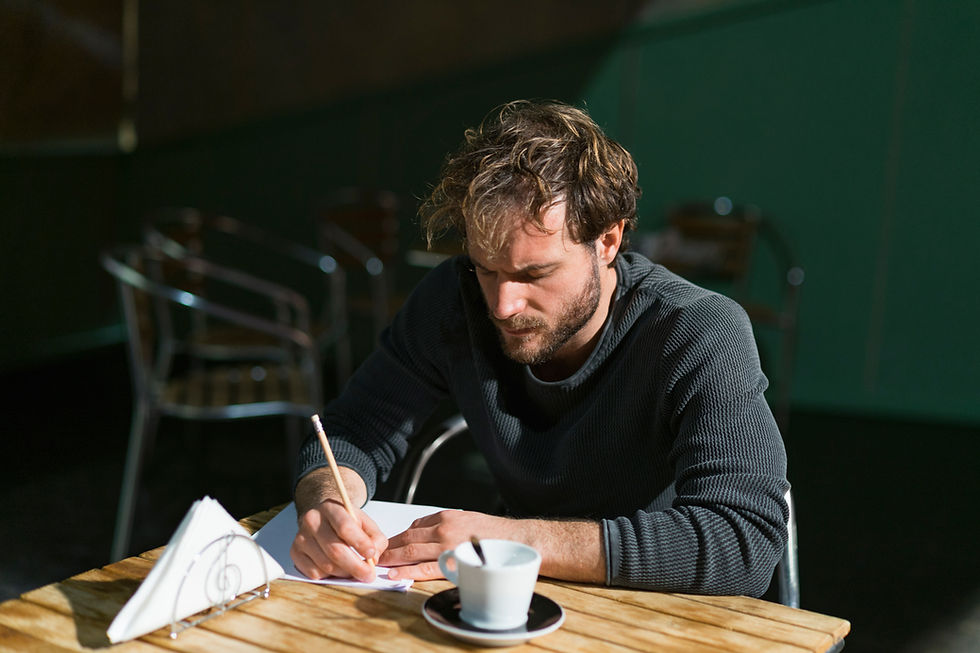
Valerie - Very true. Think, what is it? I've heard it said that writing is 10 % writing and 90 % editing. So, you just got to do that 10%. That's no big deal. Just do that a little bit. No, doesn't. Too fun. Well, tell us a little bit about your main character and kind of the situation we find her in at the beginning of the book.
Carol - Okay, so Kate Dinsmore is 15, and it's 1950 like you said, and she is on her parents, well it's actually her grandparent's tobacco farm in Tabor City, North Carolina. The opening scene is a historical event. Happened. Taper City is a real town between Charlotte, where I live, and Myrtle Beach, which is on the beach. It was a tobacco town, and it started with a KKK parade through the town that she witnessed. I knew that I was going to have. I wanted a story about where Kate grew up in a rural area and then moved to Charlotte. I had that figured out, but I didn't know where it would, I mean, I looked at a couple of different places in the South, and then when I saw that was a real event and I mentioned it to Joy, she was like, that's it, that's where you have to start. And so that's the setup of the book, and what's important, also important in that very first chapter, is that she sees Horace Carter, who is the editor of the small town newspaper there, and he comes out of his newspaper building, and he starts scribbling on his notepad, and he starts taking notes. And he becomes her mentor and the person that she looks up to a lot. And I can't give away the whole book, but Horace Carter is a real person who won the Pulitzer Prize in 1952 or 53 for his work, his editorials against the KKK.
Valerie - Wow, that's impressive. Now, why is this particular topic about social injustice and pre-civil rights for YA?

Carol -It's really because I live in Charlotte. I'm not from Charlotte, though. I'm from South Jersey. And I just was curious about the period here in Charlotte, what it was like before civil rights in the 60s. And so I thought I was writing a book that when people would ask me, I'd say, well, it's a pre-civil rights book in the South. But I mentioned that to Harold Underdown. I don't know if you're familiar with his name or not, but he was my mentor at a highlights retreat, a writing workshop that I went to, and he said, Carol, that's just the setting. And I was like, OK, I didn't know that. And so then what I did was he said to me, he said, what does she want? And so that is pretty fundamental to a book. But I had written two nonfiction books. I'd never written a novel before. I just knew that I wanted to do it, and I wanted to write for kids, write for teens. I, so I was like, okay, so what does she want? So answering that question took a long time, but I had my setting before I knew my character, if that makes any sense. So, okay, so I knew, and I knew that it was, was gonna end up in Charlotte, and then there was going to be a crisis of, she grew up, rural south and now she's living with her very wealthy grandparents. And so I knew that there would be clashes there, and I had this picture in my mind about some of the things that would happen. That's the answer to that question.
Valerie - No, that's great. It's an interesting period, and to see those events through a teenager's mind will be an exciting read because I think a lot of the times we've seen books like To Kill a Mockingbird, which we kind of see, you know, civil rights a little bit or pre-civil rights a little bit, kind of in almost from a child's perspective, which is just amazing. I don't think, I think we could talk a whole podcast on Harper Collins' book, but, but just to see it as a teen who is struggling with their own identity, struggling with who they are, who they want to be, who are they going to look up, look after, who are they going to, follow, you know, one person's point of view on civil rights and, know, just where people were in that time. And I think even in our culture today, if that's kind of where kids are, they're having to fight these competing narratives and have to decide, what do I believe? Where do I stand? And I love that opportunity for kids to see your main character go through something that they're facing in their schools.
Carol - Yeah, well, it's interesting because, without giving too much away about the book, I pictured for a long time that another important character in the book would be a black teenager who's a maid in her grandmother's house. And I pictured for a long time that perhaps they were related. And so that's the mystery in the book of how they're related and how they both handle that relationship. And so the civil rights, it's interesting now talking to you about this because the civil, the pre-civil rights are there. And so you see the whites-only signs, and you see black seven to sit on the back of the bus and this other main character, her name is Lillian. You see some of her struggles. She is very light-skinned, and so she has some of her challenges. But so that's sort of the atmosphere, if you will, and the environment. But the story is about the two girls and how they discover this relationship and what it ends up meaning to the two of them.

Valerie - It sounds amazing. Can't wait to dig through the chapters myself. But what do you hope to communicate with kiddos with this book?
Carol -I'm hoping to communicate, well, it's called half-truths, okay? So, I really hope to communicate that it's really important for us to be truth-speakers and not to hide behind half-truths. And also that half-truths can poison families, you know, for generations of people not wanting to admit something has gone on or not wanting to bring out the skeletons in the closet. And also, I'm hoping that there'll be some more conversations. You know, the atmosphere today is different than in 1950, and that's a good thing. That's a good thing. But there's still a lot of miscommunication, stereotypes and prejudices. That even though you have white kids and black kids in the same schools, they're still, are they friends? And so I'm hoping to promote more conversations between kids as well as between teens and their parents, I'm hoping. I just think this would be a great mother-daughter book club-type book. So I'm hoping it'll be used that way.
Valerie - Very neat. Could see how that would be a great conversation of just talking about what's gone on in our pasts. Because I know in my church group, some families are trying to rewrite their family story. You know, there's coming from a past that we don't see on sitcoms, you know, Thursday night, but you know, it's one of those, they are trying to rewrite their story. They're trying not to hide where they come from, but to be like, this is where we've been. But because of Jesus, we are doing things differently moving forward.

Carol - That is great. I want to reach those readers and the people, not just those readers, because they are already moving in the right direction, but the people who are scared to go in that direction, who don't want to look at their family background or admit it. It is just, you know, we all live with that to one degree or another in our families, you know, whether We are sweeping things under the rug ourselves or have been swept under the rug, you know, let's put it that way. And it just has poisonous effects on generations.
Valerie - It's very true, it affects relationships, whether you're in the same city, the same house, or even at distances. Now, Carol, when did your writing journey begin?
Carol - Well, I think as a kid, I have probably a lot of people answer that. I, as a kid, this was before the internet, you know, I had pen pals, and I had a journal. And that was the way I learned to translate my thoughts and feelings was by writing. And I also had a mother who loved me and said, Carol, you have a way with words. And that was, you know, that stuck with me for a long time. So I was on the high school newspaper, and I didn't do a high school, you know, a college newspaper or anything like that, but being on the high school newspaper was probably part of that. I probably somewhere still have some of the articles that I wrote. I don't know. I'd have to look through my files, but I love to read. You know, I've always loved reading and I love stories. My first published article was when I was in college, and then gradually, I started with nonfiction because nonfiction just felt much safer than fiction. I could report on something. I could describe something. I could see it, you know. So, going into fiction, what about 20 years ago, I felt like I was diving into a deep pond, and I didn't know where I would surface. So long time.

Valerie - Well, it's fun to see how, you even how you walked into writing as nonfiction and newspaper, you know, kind of might add to your main character a little bit and just kind of her journalistic journey to, I'm sure.
Carol - Well, you know, it's interesting because when I read the over the first draft, I have to admit I cried because I was like, this is about me. I didn't know it was about me. And then the more, and that was many years ago. And then I think it's become more about me. I didn't even, like, when I picked that she wanted to become a journalist, I was just sort of, at first, she was gonna be, she was writing poetry, and then I changed that. And then I thought she could be a photographer. But then I was like, well, she could be a writer. And then that's something I can relate to. So yes, we do. Yeah, even though Kate is fictional and, you know, Lillian is fictional, the whole plot is fictional, yes, we do end up writing what we know. That's true.
Valerie - We write what we know, right, and the relationships we encounter and the people that we respond to, and it filters in. Too fun. Well, Carol, what is your favorite book?
Carol - Well, Joyce, I love Joyce's books, Joyce Moyer-Hosteter has written a series called the Baker Mountain series. And she wrote, so she's been my mentor and my inspiration a lot. And I

read her book Blue, which takes place I'm in North Carolina, it takes place in Hickory, North Carolina. And it was the story of the polio epidemic in the 40s, in the 40s. And then she ended up writing a whole series. That is all about that family. And I just love her writing. It's lyrical, and it's beautiful, and it's also, just really, heart, it touches your heart.
Valerie - Very sweet. And now, other than the Bible, what is the most impactful book in your life?
Carol - I don't know what to say. I guess in terms of my development as a writer, I read Cynthia Voight's books about 40 years ago. Are you familiar with her as an author? Okay, so when I read, I can't remember the title, Dicey Song, Dicey Song, and some of her

other books, I just thought I wanted to write like that. I want to write a character with deep relationships family relationships. So I'd have to say that. I'd have to point to her. Although I've read, you know, I've read a lot of books since then, and they tend to like the book I read is like, this is my new favorite, you know.
Valerie - It's hard with books. Like, what is it? You have a favorite book of the season almost. It's like, well, this part of my life, it's this book, and this part of my life, it's this. And it's kind of one of those, I always try to choose the book that I could read a hundred times and love it just as much. Know, it's, you know, when it's as a children's book author, it's usually a few children's books are on the list. What can we expect next from you, Carol?
Carol -Well, I've started two other books, and the one I'll probably work on next is a prequel to this book. So one of the things I've written about is glass. I wrote a book that never got published. It was on the history, art, and science of glass. And so I vowed when that book did not get published that I would have something about glass in every book. So Kate's grandfather was a glass blower when he was a teenager, and I want to write his story. So the book is called Out of the Furnace, and it's going to take place in South Jersey in the late 19th century.
Valerie - Very neat. I love watching the glass-blowing reality shows they have now. I think it's still called a reality show because it is amazing. It is a science, and it's wild to watch what they could do with glass.

Carol - Yes, it is. I mean, it's magical, and it's also scientific, it's just amazing. So that's what I'll be working on next.
Valerie - That sounds exciting. I know you fall in love with the characters that you're writing about, and some stories still need to be told, even from those characters that you introduce little bits of. So that'll be exciting. Now, where can people find out more about you and your books, Carol?
Carol – The best place is my website, carolbaldwinbooks.com, and I am mostly active on Facebook. I haven't gotten the hang of... I'm on Twitter. Those are mostly the two places that I'm on rather than saying what I'm not on, but I'm mostly on Facebook.
Valerie - Very neat, I'll make sure to have some links so people can connect with you there and on your website as well. Well, thank you for being with us today, Carol.
Carol - Thank you. This has been a lot of fun. I appreciate the conversation.
Valerie - And thank you for joining Carol and me on this episode of the Bookworthy Podcast. Check the show notes for any books or links that we discussed, and let us know in the comments what's your favorite vacation spot. Check the Bookworthy Summer Reading Challenge for kids and parents and be sure to like and subscribe so we can discover more great books together.
Happy reading.


Comments